
Precision Injection Molding Drives Performance and Safety in Automotive Manufacturing
Injection molding for the automotive industry is the high-pressure process of forcing molten plastic into precision-engineered steel molds to create vehicle components with exacting tolerances. This method enables the mass production of lightweight yet durable parts like dashboards, bumpers, and interior trims, replacing heavier metal assemblies without sacrificing strength. The key advantage is unmatched repeatability at scale, allowing manufacturers to produce thousands of identical, complex-geometry parts in a single automated cycle, which slashes per-unit cost and assembly time. By integrating multiple functions into one molded piece—such as snap-fits or attachment points—engineers drastically reduce post-molding plastic injection molding automotive parts work and hardware requirements.
Precision Plastic Components in Modern Vehicle Manufacturing
Precision plastic components, made via injection molding, are the unsung heroes of modern vehicle manufacturing. Tight tolerances ensure that parts like sensor housings and dashboard bezels fit perfectly the first time, cutting down assembly-line headaches. You get consistent, lightweight parts that reduce overall vehicle weight without sacrificing strength. These molds can produce complex geometries in a single shot, eliminating the need for multiple metal pieces joined together. It’s fascinating how a precisely molded interior trim clip can prevent rattles without the noise of a metal fastener. For high-volume production, the repeatability of injection molding is a game-changer, keeping replacement parts identical every cycle. This reliability directly translates to safer, quieter, and more durable vehicles on the road.
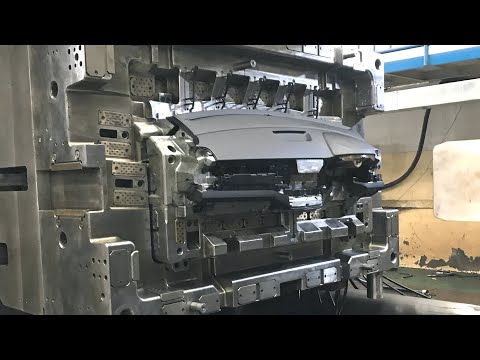
Role of High-Volume Molding in Lightweight Vehicle Design
High-volume molding directly enables lightweight vehicle design by producing large-scale, thin-wall structural parts like door modules and bumper beams from advanced polymers instead of steel. This process allows engineers to replace heavy metal assemblies with a single injection-molded component, slashing mass by up to 40% without sacrificing crash performance. The repeatability of high-volume molds ensures every part meets tight tolerances for weight-sensitive assemblies, while gas-assist molding reduces material use further. By consolidating multiple metal stampings into one plastic part, manufacturers streamline assembly and reduce overall vehicle weight, directly improving fuel efficiency and driving range.
Q: How does high-volume molding reduce vehicle weight?
A: It produces large, complex parts in lightweight engineering thermoplastics, eliminating the need for heavier metal reinforcements and allowing multi-functional part consolidation.
Material Selection for Durability and Heat Resistance
In precision plastic components for modern vehicles, material selection for high-temperature under-hood performance directly dictates part longevity. Engineers prioritize polyphthalamide (PPA) and polyphenylene sulfide (PPS) for continuous exposure above 150°C, as they retain mechanical strength without creep. Glass-fiber reinforced PA66 balances cost with thermal stability for radiator end tanks, while liquid-crystal polymers (LCP) resist peak engine bay spikes near 260°C. Continuous-use temperature, glass transition point, and thermal expansion coefficient must align with adjacents’ properties to prevent deformation or interface failure.
| Resin Type | Max Continuous Temp (°C) | Key Durability Trait |
|---|---|---|
| PPA | 170-220 | High strength retention |
| PPS | 200-240 | Chemical & creep resistance |
| LCP | 240-260 | Peak spike tolerance |
Advances in Thermoplastic and Thermoset Applications
Recent developments in high-performance thermoplastic composites enable direct overmolding of continuous fiber-reinforced sheets, producing lightweight structural components like battery enclosures with superior impact resistance. Simultaneously, novel thermoset formulations achieve faster cure cycles through advanced catalyst systems, allowing complex under-hood parts to withstand prolonged thermal cycling above 200°C. Hybrid approaches now bond thermoset cores with thermoplastic skins in a single injection sequence, eliminating secondary assembly for oil pan modules. These material refinements expand design freedom for integrated cooling channels and snap-fit geometries previously impossible in single-polymer systems.

Advances in thermoplastic and thermoset applications now merge continuous fiber reinforcement with rapid-cure chemistries, enabling multi-material, thermally resilient precision components that reduce mass and assembly steps in modern vehicles.
Key Interior and Exterior Parts Produced Through Molding

Injection molding is the dominant process for producing critical automotive interior parts like dashboard panels, door trims, and center consoles, enabling complex geometries and integrated textures directly in the tool. For exteriors, it creates durable bumpers, fender liners, and mirror housings that withstand impact and weathering. The precision of this method allows for seamless class-A surface finishes on exterior body panels while maintaining exacting dimensional tolerances across high-volume production runs. Beyond aesthetics, injection molding integrates functional features like snap-fit attachments, mounting bosses, and conduit channels into a single molded part, reducing assembly steps and overall vehicle weight.
Dashboard Assemblies and Trim Panel Fabrication
In automotive injection molding, dashboard assemblies and trim panel fabrication prioritize structural integrity and aesthetic precision. Large-part molding techniques produce complex, single-piece dashboard carriers, while trim panels use multi-material overmolding for soft-touch surfaces. Critical considerations include uniform wall thickness to prevent sink marks and the integration of mounting bosses for airbag deployment paths. Class A surface finish requirements demand polished tool steel molds and precise process control to eliminate flow lines on visible grains or textures.
- Use of co-injection or gas-assist molding for lightweight dashboard cores with hollow sections
- Pre-bonding of plastic substrates with decorative foils or films during the molding cycle
- Integration of hard-matte vs. soft-touch materials in a single trim panel via two-shot molding
Bumper Systems and Body Panel Molding Techniques
Injection molding produces entire large-scale automotive body panels and bumper systems in a single, seamless cycle, eliminating secondary assembly. For bumpers, gas-assisted injection molding creates hollow core structures that absorb impact while reducing material weight. Body panels, such as fenders and doors, utilize low-pressure injection molding with polypropylene or TPO to achieve Class-A surface finishes directly from the mold, avoiding paint defects. Multi-material overmolding integrates soft-touch zones onto rigid bumper fascias within the same tool.
- Gas-assisted molding forms internal channels in bumpers for impact energy absorption without adding mass.
- Low-pressure injection molding for body panels reduces internal stress, preventing warpage in large, thin-wall parts.
- Sequential valve gating controls melt flow in multi-cavity bumper molds to balance fill and minimize weld lines.
Lighting Housings and Lens Manufacturing Processes
For automotive lighting, injection molding creates both the housing and the lens. Housings, often from heat-resistant black nylon or PBT, are molded with precision snap-fits and alignment bosses. Lens manufacturing processes demand optical-grade polycarbonate and extremely clean molds to avoid flow lines or haze. Multi-shot molding can seal the lens to the housing with a gasket-soft second material. Cooling time is especially critical for lenses, as uneven heat causes warping that ruins beam patterns. Proper gate placement prevents weld lines that could weaken the housing’s structural integrity.
Lighting housings are molded from heat-stable materials with integral mounts, while lenses require optical-purity resins and flaw-free tooling to achieve clear, distortion-free light transmission.
Under-the-Hood Components and Performance Requirements
Under-the-hood components for automotive injection molding must withstand extreme thermal cycling, chemical exposure, and mechanical stress. Performance requirements demand materials with high heat deflection temperatures, typically over 150°C, and resistance to oils, coolants, and vibration. Glass-filled nylon (PA6/PA66) or polyphenylene sulfide (PPS) are common due to their dimensional stability and creep resistance. Tooling must incorporate hot runners and hardened steel to manage abrasive fillers and tight tolerances for parts like intake manifolds or oil pans. Q: What is the primary durability challenge? A: Sustained thermal and chemical resistance under hood without warping. Mold design requires core cooling channels to prevent sink marks in thick-walled sections.
Engine Covers and Intake Manifold Production
Engine covers and intake manifolds are produced via injection molding using glass-filled nylon or polypropylene to achieve **high dimensional stability** under hood heat. Engine covers require Class A surfaces for aesthetics and acoustic insulation, while intake manifolds demand smooth internal channels for unrestricted airflow. Mold design focuses on core pulls for complex geometries and hot-runner systems to minimize weld lines. What is the main advantage of injection molding for intake manifolds over metal casting? It allows thinner walls and integrated air ducts, reducing weight by up to 40% while improving volumetric efficiency through seamless internal contours.
Cooling System Parts and Fluid Handling Elements
Effective thermal management in injection molding for automotive parts hinges on precisely engineered cooling system parts and fluid handling elements. Baffles and bubblers direct coolant into deep cores to eliminate hot spots, while spiral channels in conformal cooling lines accelerate cycle times. Fluid handling elements, such as rotary unions and manifolds, must maintain consistent flow rates and pressure to prevent warpage in large body panels. Corrosion-resistant materials in piping and connectors ensure longevity, as even minor leaks cause defects in structural components.
Cooling system parts and fluid handling elements control thermal uniformity and cycle efficiency, directly impacting part quality and production throughput in automotive injection molding.
Electrical Connectors and Sensor Housings
Under the hood, precision-engineered electrical connectors and sensor housings must withstand extreme thermal cycling and vibration while maintaining a perfect seal against moisture. Injection molding achieves this by using high-temperature thermoplastics like PBT or PA66, allowing for complex geometries that lock wire harnesses securely. For sensor housings, the process integrates overmolding to encapsulate delicate electronics, ensuring signal integrity in oil-soaked environments. A critical focus is controlling flash at mating interfaces, as even micron-level defects can cause intermittent faults in critical systems like ABS or transmission controls.
Tooling Innovations for Automotive Production Efficiency
To boost automotive production efficiency, tooling innovations focus on rapid conformal cooling channels created via additive manufacturing. These channels, placed directly within injection molds, drastically cut cycle times by removing heat faster than traditional straight-line drilling. This allows for tighter dimensional stability in high-stress components like engine bay parts.
By reducing cooling phases by up to 40%, molds achieve higher cavitation counts without sacrificing part quality, directly accelerating throughput on multi-cavity tools for trim and under-hood plastics.
Hardened steel tool inserts with gradient surface texturing also minimize wear from glass-filled nylons, extending tool life between maintenance stops. The result is a leaner, faster production rhythm that keeps assembly lines moving.
Multi-Cavity Molds and Cycle Time Optimization
Multi-cavity molds are a game-changer for automotive production because they let you shoot multiple parts—like clips or connectors—in a single cycle, directly slashing cycle time per part. To truly optimize, you must balance cavity count with cooling channel layout; uneven cooling in a 16-cavity tool can wreck cycle consistency. Balanced fill and cooling is the secret, so using mold flow analysis to tweak gate positions and runner sizes prevents overpacking. A quick comparison helps:
| Aspect | 4-Cavity Mold | 16-Cavity Mold |
| Cycle time per part | Higher | Lower (if balanced) |
| Cooling complexity | Simple | Requires baffles/bubblers |
| Potential scrap | Lower risk | Higher if flow unbalanced |
Keep your melt temperature consistent and invest in conformal cooling inserts—they pull heat out faster, letting you run the mold at a quicker cycle without warping those high-tolerance automotive parts.
Hot Runner Systems and Gate Design Strategies
In automotive injection molding, hot runner systems with valve gate strategies eliminate cold-runner waste and reduce cycle times. Valve gates provide precise control over melt flow, preventing sink marks and ensuring uniform packing in complex geometries like interior trims. Thermal gates suit simpler parts such as underhood components for lower maintenance. Gate placement must account for high-gloss surfaces, avoiding weld lines near visible areas. Cascade sequencing of multiple gates optimizes knit-line strength in large bumpers or structural panels. Balanced manifold design ensures equal cavity filling across multi-tool setups.

Hot runner systems paired with strategic valve or thermal gating reduce scrap, improve part aesthetics, and enable consistent fill for high-volume automotive production.
Steel and Aluminum Mold Selection for Long Runs
For long runs in automotive injection molding, the choice between steel and aluminum hinges on volume and cycle time. Steel molds, like P20 or H13, are best for millions of cycles because they resist wear from glass-filled plastics. However, aluminum molds quicken time to market due to faster cooling, which can boost cycle efficiency for runs under 500,000 parts. Keep in mind aluminum’s lower hardness risks surface damage on complex geometries, so opt for steel if part tolerances are tight.
| Steel | Aluminum |
|---|---|
| Superior durability for high cavitation | Lighter for easier tool changes |
| Handles abrasive resins long-term | Poorer wear resistance over 500k cycles |
| Higher initial cost | Lower cost, faster machining |
Quality Control and Testing in Vehicle Part Manufacturing
The mold tech, Clara, watched the first shots of the new headlamp housing cycle onto the conveyor. She grabbed a housing, the hot plastic still releasing its acrid scent, and felt for flash along the parting line. The coordinate measuring machine later confirmed her suspicion: a 0.1mm warp near the cooling channel. “Why is warpage a bigger risk in large, thin-wall automotive parts?” Because uneven cooling from core and cavity creates internal stress, distorting the geometry. Clara adjusted the mold’s water flow regulators—a practical, repetitive QA step that prevents faulty assembly down the line.
Dimensional Accuracy and Warpage Prevention Methods
In automotive injection molding, achieving dimensional accuracy and warpage prevention hinges on precise mold temperature control and balanced filling. Engineers employ conformal cooling channels within the mold core to extract heat uniformly, minimizing uneven shrinkage that causes distortion. Simultaneously, gate location analysis software optimizes polymer flow fronts, reducing internal stresses. For large structural parts, glass-fiber reinforcement is strategically oriented through flow simulation, counteracting anisotropic warpage. Real-time cavity pressure sensors trigger holding phase adjustments, ensuring every cooling cycle locks in the specified tolerances demanded for snap-fits and mating surfaces.
Fatigue Testing and Impact Resistance Validation
Fatigue testing for injection-molded auto parts simulates years of vibration and load cycles in hours, using hydraulic actuators to flex components like engine mounts or suspension brackets until failure. Impact resistance validation then slams parts with weighted pendulums or drops projectiles at specific velocities, confirming they won’t shatter in a collision. A dynamic durability assessment combines both tests to catch weak spots like weldlines or knit lines. Q: How does fatigue testing differ from impact validation? A: Fatigue checks long-term cyclic stress failure, while impact validation measures sudden-force fracture resistance. Cyclic loading data helps us adjust material choice or ribbing for real-world safety.
Surface Finish Standards for Aesthetic Components
For visible automotive interior and exterior components, surface finish standards for aesthetic components are dictated by specific gloss, texture, and orange peel tolerances. Molds are finished with graded diamond pastes or EDM textures to replicate SPI or VDI standards precisely. A uniform matte or high-gloss finish requires strict control of melt temperature, cooling rate, and cavity pressure to prevent flow marks or knit lines. Even a 0.5-gloss unit variation can cause rejection, so profilometers and visual gloss meters are used for rigorous pass/fail checks.
How is the specific gloss level for an automotive dashboard ensured during mold design? The mold cavity is polished or texturized to an exact SPI/VDI grade, and the steel is hard-chrome plated to maintain that surface under repeated injection cycles, preventing gloss drift.
Cost Reduction and Sustainability in Automotive Molding
In injection molding for the automotive industry, cost reduction and sustainability often go hand-in-hand. Using recycled polymers like post-consumer polypropylene lowers material expense while reducing waste. Lightweighting parts through advanced mold design cuts production costs and improves fuel efficiency. Q: How can you reduce scrap in high-volume automotive runs? A: By optimizing gate location and using hot runner systems, you minimize waste and cycle time. Adopting biobased or single-material designs simplifies recycling at end-of-life and avoids expensive separation. Even switching to energy-efficient servo-driven presses trims electricity bills and carbon footprint directly.
Recycled Materials and Closed-Loop Production Systems
In automotive injection molding, closed-loop production systems turn scrap and post-industrial regrind directly back into the molding process, slashing raw material costs. Using recycled polypropylene or nylon from bumpers and interior trim reduces virgin resin use without sacrificing part strength. To maintain quality, you’d need to adjust processing temperatures and screw speeds for each batch of reclaimed material. A quick comparison helps here:
| Recycled Materials | Closed-Loop Systems |
| Require filtration to remove contaminants | Keep material streams pure by grinding in-house |
| May need compatibilizers for blend stability | Allow direct reintroduction of sprues and runners |
| Lower carbon footprint per part | Cut waste disposal costs completely |
It’s a practical cycle: mold parts, collect scrap, regrind, and remold—saving money while meeting OEM sustainability goals.
Energy-Efficient Machinery and Reduced Scrap Rates
Modern injection molding machines integrate servo-driven hydraulics and all-electric actuators to directly lower energy consumption per cycle, which reduces operational costs. Concurrently, precision process controls like closed-loop monitoring and adaptive hold pressure minimize material waste, achieving reduced scrap rates by catching defects mid-cycle. This dual benefit—optimizing energy per molded part while curtailing material waste—directly improves part cost-efficiency and sustainability for high-volume automotive components like bumpers and dashboards.
Supply Chain Integration for Just-in-Time Delivery
Automotive injection molding relies on tight supply chain synchronization to achieve just-in-time delivery, directly cutting warehousing costs and material waste. Molding facilities integrate real-time production schedules with tier-one suppliers to trigger raw material shipments only when a molding cycle begins. This eliminates large resin inventories and reduces the risk of obsolete batches from changing automotive specs. Cross-docking setups align finished part deliveries with assembly line starts, preventing idle storage. The system demands precise communication between logistics and molding operators, ensuring each mold opens precisely when the next batch of plastic pellets arrives.
- Aligning resin delivery schedules with specific molding cycle times
- Implementing cross-docking that bypasses intermediate warehousing
- Using real-time production data to trigger raw material releases
Emerging Trends Shaping Plastic Part Fabrication for Cars
The shift toward multi-material overmolding is enabling single-shot fabrication of complex, lightweight assemblies that replace metal subcomponents. To achieve this, practitioners must master in-mold assembly techniques that bond dissimilar thermoplastics without secondary operations. Properly controlling the melt-interface temperature during sequential injection is critical to prevent delamination under thermal cycling stress. Concurrently, the adoption of gas-assist injection molding creates hollow core structures for ductwork and structural ribs, reducing material usage while meeting crash-impact requirements. Tooling designs now integrate conformal cooling channels via additive manufacturing, cutting cycle times for high-gloss A-surface panels. These methods demand precise rheological modeling to manage shear-induced fiber orientation in glass-filled polypropylene, directly impacting dimensional stability in molded-in living hinges.
Electric Vehicle Lightweighting and Battery Enclosures
Electric vehicle lightweighting directly drives the shift to structural battery enclosure molding. Injection molding replaces heavy metal trays with high-strength thermoplastics, reducing overall pack mass. This process integrates complex features like cooling channels and mounting bosses in a single shot, eliminating secondary assembly steps. For optimal performance, the sequence follows: first, select a flame-retardant resin with high dielectric strength; second, design thin-wall sections reinforced with continuous fibers; third, apply gas-assist molding to create hollow ribs for stiffness without added weight. Each step ensures the enclosure withstands crash loads and thermal runaway while maximizing energy density.
Additive Manufacturing Integration with Traditional Molding
Additive manufacturing integration with traditional molding enables rapid tooling inserts for injection molds, directly reducing lead times for complex automotive components like air intake manifolds. Hybrid production uses 3D-printed conformal cooling channels within steel mold bases, achieving uniform thermal management that cuts cycle times significantly. This approach allows low-volume bridge tooling to validate designs before committing to hardened steel molds. Hybrid mold production streamlines prototyping and short-run series without sacrificing part quality. Q: How does additive manufacturing integration reduce mold modification costs? A: It allows direct printing of cooling channel adjustments onto existing mold inserts, eliminating expensive re-machining of the entire tool when optimizing thermal profiles for plastic part fabrication.
Smart Sensors and In-Mold Electronics for Connected Vehicles
Smart sensors and in-mold electronics enable injection-molded plastic parts to function as integrated electronic interfaces within connected vehicles. During the molding process, conductive traces, antennas, and microcontrollers are embedded directly into the thermoplastic, eliminating post-mold assembly. This creates seamless touch-sensitive panels, structural health monitors, and near-field communication surfaces that withstand vibration and temperature extremes. The molded part itself becomes a sensor hub, relaying real-time data on occupant presence, climate, and impact forces to the vehicle’s central network without external wiring.
Smart sensors and in-mold electronics fuse circuitry with molded plastic components, forming durable, data-active surfaces that directly support vehicle connectivity and real-time environmental awareness.